Most threads should have been one post

You have something worth saying and it does not fit in one post. The reflex is immediate and almost automatic: make it a thread. Number the tweets, add the little emoji, and ship it.
Then it does worse than your normal posts and you conclude threads are dead, or that the algorithm hates them, or that you need a better hook. Usually none of those. Usually the material was one post and you spread it across eight.
A thread is not a longer post. It is eight decisions
This is the part the format advice skips. In a single post the reader makes one decision: keep reading or scroll. Once they are in, the rest is free, because there is nothing left to opt into.
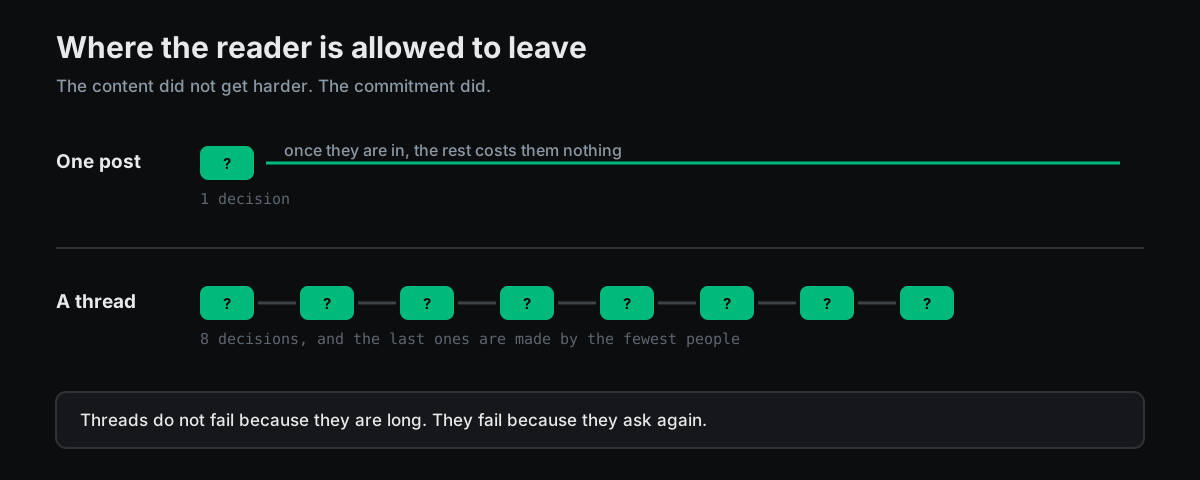
A thread rebuilds that decision at every step. Tweet two has to earn its own tap. So does tweet three. You have not made the idea longer, you have added seven more places for someone to stop, and none of those places are free.
The same logic explains why the first line matters so much. In a thread you are not writing one opener, you are writing eight, and most people write one good one and then seven pieces of connective tissue.
What it costs you, not just the reader
There is a second cost that is easier to miss because it shows up in your analytics rather than in your feelings.
- Your engagement gets divided. Replies, likes and bookmarks scatter across eight objects instead of concentrating on one. A post with forty replies reads differently to the feed, and to a human visitor, than eight posts with five each.
- Only the first one competes. The rest live below it, seen mostly by people who already committed. So the top of your thread is doing all the distribution work while the other seven do none.
- It is harder to reuse. A single dense post can be quoted, screenshotted or reposted later as a unit. A thread cannot, which quietly removes it from your own back catalogue.
The four cases where a thread genuinely wins
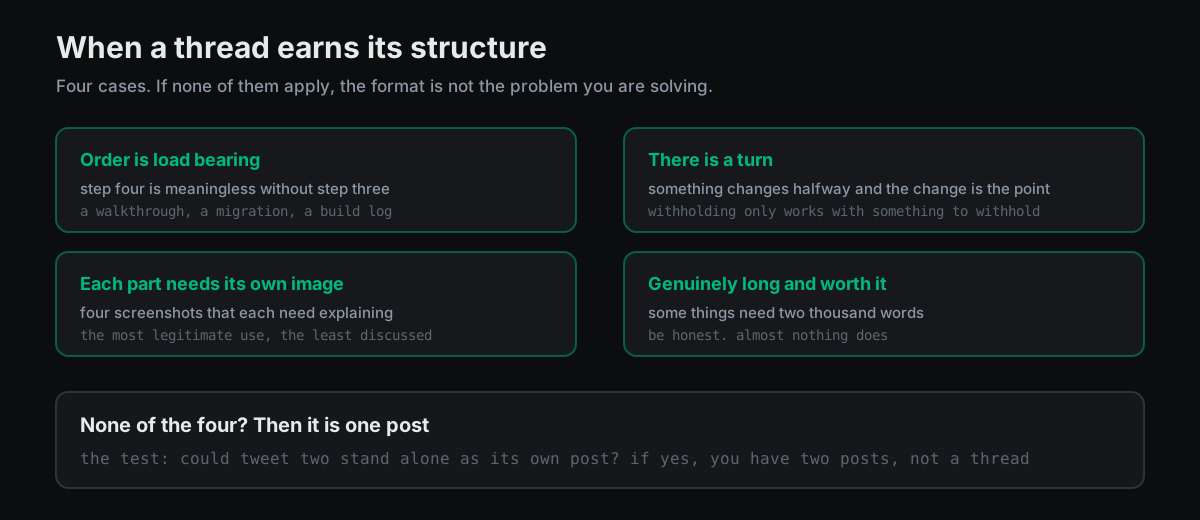
Order is load bearing. Steps that only make sense in sequence, where step four is meaningless without step three. A walkthrough, a migration, a build log. The thread structure is doing real work here because the reader needs the checkpoints.
There is a turn. A story where something changes halfway and the change is the point. Threads are good at withholding, and withholding only works when there is something worth withholding.
Each part needs its own image. Four screenshots that each need their own explanation cannot live in one post. This is the most legitimate use and the least discussed.
It is genuinely long and genuinely worth it. Some things need two thousand words. If yours does, a thread is a reasonable container. Be honest about whether it does, because almost nothing does.
The ten second test
Before you write the second tweet, ask one question: could tweet two stand on its own as a post?
If yes, you do not have a thread. You have two posts, and you are about to publish the second one in the worst possible position, buried under the first, on the same day, competing with itself.
If no, and it genuinely only makes sense after tweet one, then you have a real sequence and the thread is earning its structure.
Most material fails this test. The four posts from one Tuesday in what to post when you have nothing to say are exactly this: same raw material, four independent angles, each strong enough to stand alone. Published as a thread that is one post with three appendices. Published across four days it is four chances to be seen.
If you are writing one anyway
- Tweet one is the whole pitch, not an announcement. "A thread on pricing" spends your only line on filing. Make the first tweet good enough that someone would have stopped for it even if there were nothing after it.
- Do not number them. "1/12" tells the reader the price before they have decided the thing is worth buying. Let them find out how long it is by enjoying it.
- Every tweet earns the next. If one of them is only there to set up the next one, cut it and merge. Connective tissue is where threads die.
- The last one is not a summary. Same rule as any post: if it restates what you just said one abstraction higher, delete it. Finish on the strongest concrete thing.
- Put the link in a reply, not in the thread. External links in the main post cost distribution, and that applies to the top of a thread too. The reasoning is in what the algorithm rewards.
What to do with the material instead
Take the thread you were about to write and look at it as a list. Usually three or four of those tweets are strong enough to be posts, and the rest were scaffolding.
Publish the strongest one on its own, properly written, with a real opener. Keep the others. You now have three days of material instead of one post, and each of them gets a full shot at distribution instead of being read only by people who already tapped once.
If your account is small, this matters even more, because your owned distribution is thin and you cannot afford to spend four ideas on one impression. That is the same arithmetic behind the cold start.
Where this fits
Format is the last decision, not the first. Before it: where the material comes from, how it opens, and whether it sounds like you. After it: when it goes out and how to read the result without panicking. A thread cannot rescue a post that fails the earlier steps, and a good post rarely needs rescuing.
See which formats actually work on your account
MomentX reads your last month and shows which shapes earned reach for you, so the format is a decision based on your numbers rather than a habit.
Try MomentX free for 5 days