The tells that make a post read as AI

There is a reply nobody wants under their post. Four words, sometimes three: "did you use ChatGPT?" It lands worse when you did not, because you know you wrote it, and you still cannot explain what gave that impression.
The impression is not really about who typed it. It is about a small set of surface habits that have turned into a costume over the last couple of years. Enough people wore the costume that readers learned to recognise it at a glance, and now the costume gets judged before the idea underneath it does.
This is a formatting problem, not an intelligence problem
Almost every tell on the list below is punctuation, rhythm or connective tissue. None of them are about whether your point is any good. That is the good news and the annoying news at once: a genuinely sharp observation can get skipped because of a dash, and a shallow one passes because it sounds like a person.
It also means this is fixable in a single editing pass, without writing anything new. You are not changing what you think. You are taking off the costume.
Why it costs you more on X than anywhere else
On a blog, a reader who is already there will forgive a lot. On X, the judgement happens in the first line, in the feed, before anyone has decided to read the rest. And distribution on X is decided by whether people stop, reply and stay. A post that reads as generated does not get argued with. It gets scrolled past, which is the one response the feed reads as "show this to fewer people".
So the cost is not that someone calls you out. Most people will not bother. The cost is silence.
The tells, in rough order of how loudly they announce themselves
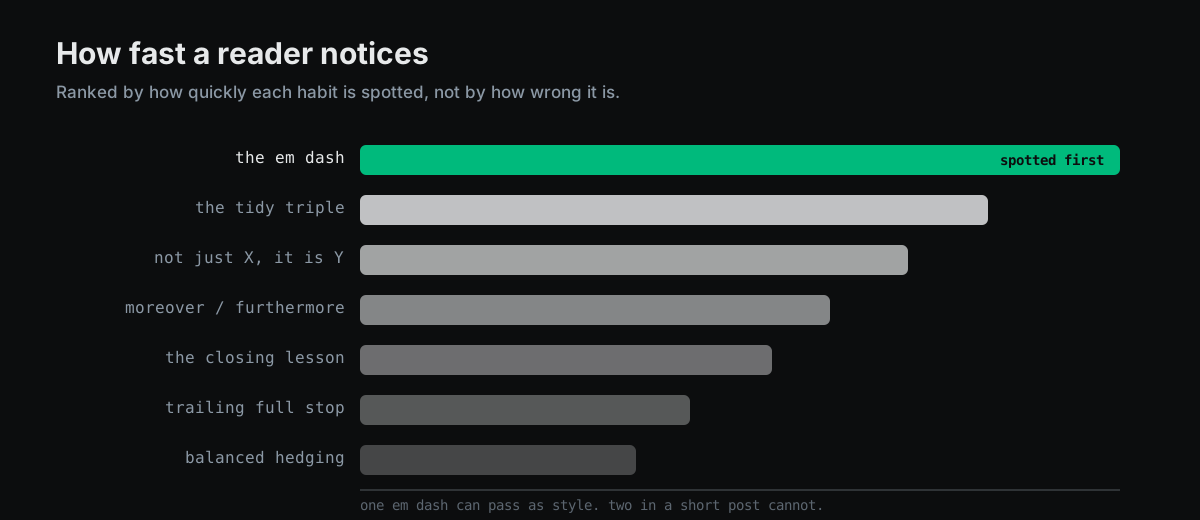
1. The em dash. First by a distance. Almost nobody types a long dash on a phone, because it needs a keyboard shortcut most people have never looked up. One can pass as a stylistic habit. Two in a short post and the reader stops reading your post and starts reading its source.
2. The rule of three. "Faster, cheaper and simpler." Three items, balanced, always exactly three. Real lists are ragged: two things, or four, or one thing said twice because the writer was annoyed. A run of tidy triples is the rhythm of something optimising for symmetry.
3. "It is not just X, it is Y." The setup and elevate sentence. It promises a reveal and delivers an abstraction. Once you have noticed it you will see it four times a day, and so will everyone else in your replies.
4. Connective throat clearing. Moreover. Furthermore. Additionally. In conclusion. Nobody has ever typed "moreover" into a phone at eleven at night. These words exist to hold an essay together, and a post is not an essay.
5. The closing summary. The final line that restates the post one abstraction higher than the rest. "The lesson is simple: consistency compounds." If your last sentence could be printed on a mug, it is doing nothing except telling the reader that the writing was assembled rather than finished.
6. Punctuation that is too correct for the room. A full stop at the end of a short post. Semicolons. Curly quotes. None of these are errors. They are just not what a person tapping out a thought at speed produces, and on X the trailing period in particular reads as a brand account.
7. Symmetrical hedging. "While there are clear benefits, it is also worth considering the drawbacks." Balanced into meaninglessness. A person with an actual opinion lands on one side and lets you disagree.
The same post, before and after
Here is a build in public post in the costume, and the same thing said by someone who was there. Nothing about the underlying content changed.
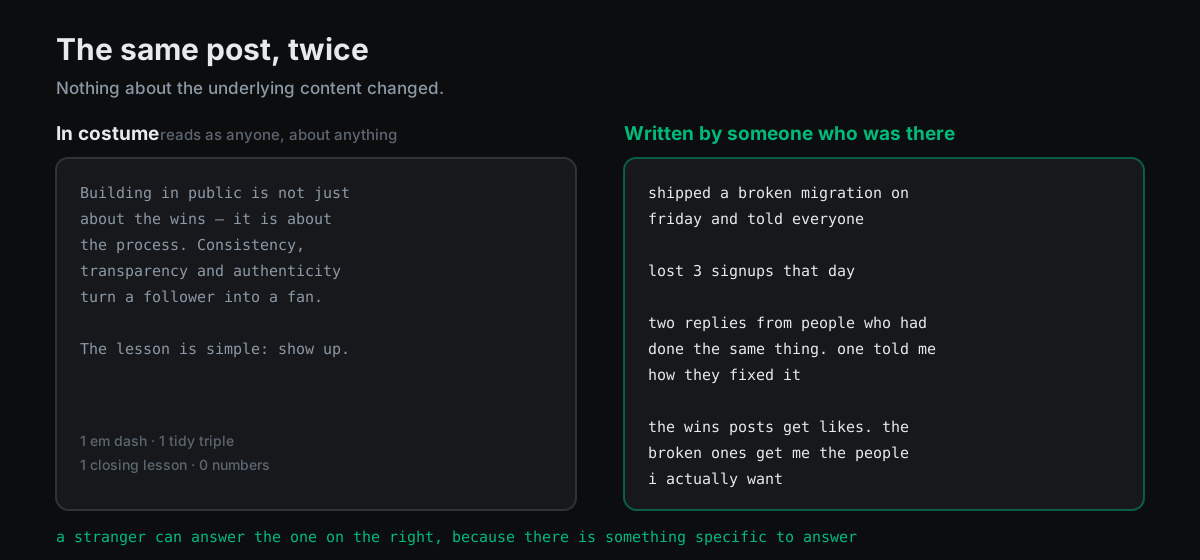
Walk the changes. The dash became a full stop. The triple ("consistency, transparency and authenticity") became one concrete number, because a number is something only the person who was there could know. The abstract noun "the process" became a specific Friday and a specific broken migration. The closing lesson got deleted entirely, and the post is better for it, because the reader gets to draw their own.
The second version is also easier to reply to, and that is not a coincidence. Concrete beats abstract for the same reason it always did: you can only answer a specific thing.
What is not a tell
This list gets overcorrected constantly, so it is worth marking the boundaries.
- Being organised is not a tell. Lists are fine. Line breaks are fine. Structure helps the reader and it always did.
- Correct spelling is not a tell. Adding deliberate typos to look human reads worse than anything on the list above, because now you are performing carelessness on purpose.
- Long is not a tell. A dense post that earns its length holds attention better than a clever one liner. Length was never the signal.
- Using a tool is not a tell. Plenty of the best posts on your timeline were drafted with help and edited by a person who knew what to cut.
The goal is not to sound careless. It is to sound like one specific person with one specific set of habits, which is the one thing an average of the internet cannot do.
A five minute pass on your own drafts
Run this before you hit send. It is mechanical on purpose, so you can do it tired.
- Search for the em dash. Replace each one with a full stop, a comma, a bracket or the word "and". This single step does more than the rest combined.
- Read the last line out loud. If it summarises what you already said, delete it. The post ends one line earlier than you think.
- Count your lists. If every one has exactly three items, break one on purpose.
- Delete the connectives. Moreover, furthermore, additionally, in conclusion, in today's fast paced world. None of them survive contact with a phone.
- Drop the trailing period. On a short post it is the cheapest change on this list.
- Ask the last question. Could this exact post have been written about a different company, in a different year, by someone else? If yes, it is too abstract to be yours yet. Put one number, one name or one date in it.
Why we learn your voice instead of giving you ours
This is the paragraph where a company that sells an AI writing tool is supposed to get defensive. We would rather explain the design decision, because the list above is the whole reason for it.
A model with no reference writes the average of everything it has read, and the average of everything is exactly the costume. So MomentX does not start from a house style. It starts from your last sixty days: your sentence length, the words you actually use, the formats that earned reach on your account rather than on a screenshot from someone else's. That profile is what every draft passes through, which is why two users asking for a post on the same topic get two different posts.
And you still edit before anything goes out. We never post for you, on purpose, and we wrote about why. A draft in your voice is a starting point that removes the blank page. It is not a finished post, and any tool that tells you otherwise is selling you the costume.
Where this fits
Voice is one of four things that decide whether an account grows, and it is the one people work on last. The other three are covered elsewhere: what the algorithm rewards, how replies borrow distribution, and what a stranger sees when they land on your profile. Fix the writing and the other three start paying better, because every one of them ends with a human deciding whether you sound worth reading.
Your last month of posts is the only style guide that matters
MomentX reads what you already wrote and drafts the next ones in that voice, not in the average of the internet.
Try MomentX free for 5 days