The best time to post on X (and how to find yours)

Everyone wants the magic hour. Search this question and you get a wall of infographics, all confidently pointing at different hours, most of them recycled from Instagram studies years old. Here is the honest answer: timing matters, the generic charts mostly don't. What matters is when your audience is on the timeline, and that is something you can actually measure.
Why the hour matters at all
X decides how far a post travels based on how it performs right after you publish it. The feed shows your post to a small sample of timelines, watches what happens, and either widens the circle or quietly drops it. Most of that judgment happens fast.
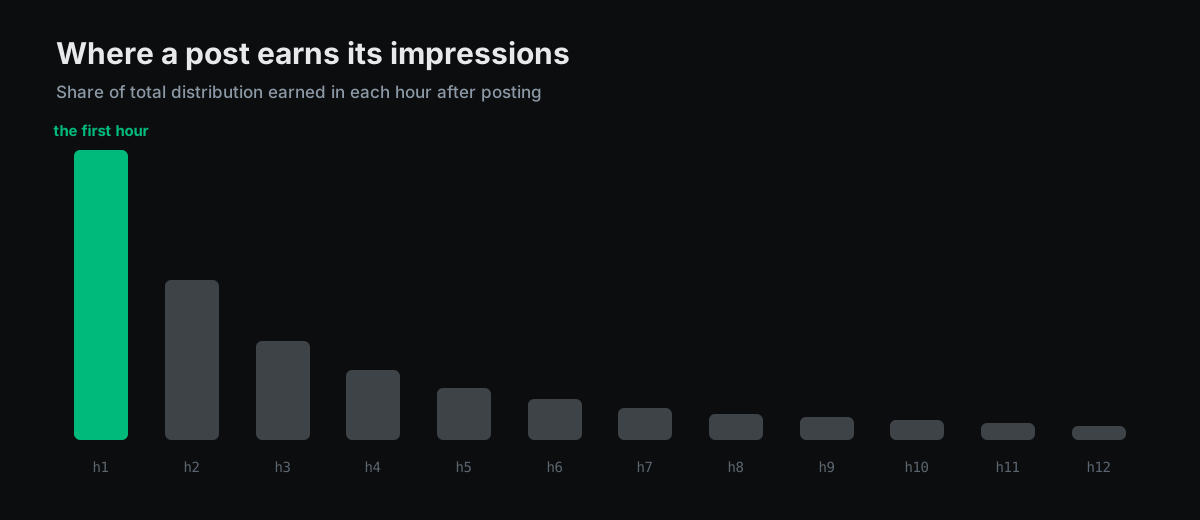
So posting when your audience is asleep is not a small mistake. Your post spends its decisive first hour being sampled to empty rooms, earns nothing, and by the time your people wake up the feed has already moved on. We covered the full mechanics in what the algorithm actually rewards; the short version is that early replies compound and silence compounds too.
The windows that work for most accounts
Across the accounts we analyze, engagement days keep the same rough shape. Not the same hours for everyone, but the same pattern:
- Weekday mornings, roughly 8 to 10. People check X with coffee, before the workday swallows them. Builders and tech audiences are heaviest here.
- A lunch bump around 12 to 13. Shorter and shallower, good for lighter posts and questions.
- Weekday evenings, roughly 18 to 21. The commute and couch window. Often the biggest one, and the best slot for takes that invite argument.
- Weekends shift later and flatten. The morning peak slides toward 10 to 12 and the total volume drops, but so does the competition for attention.
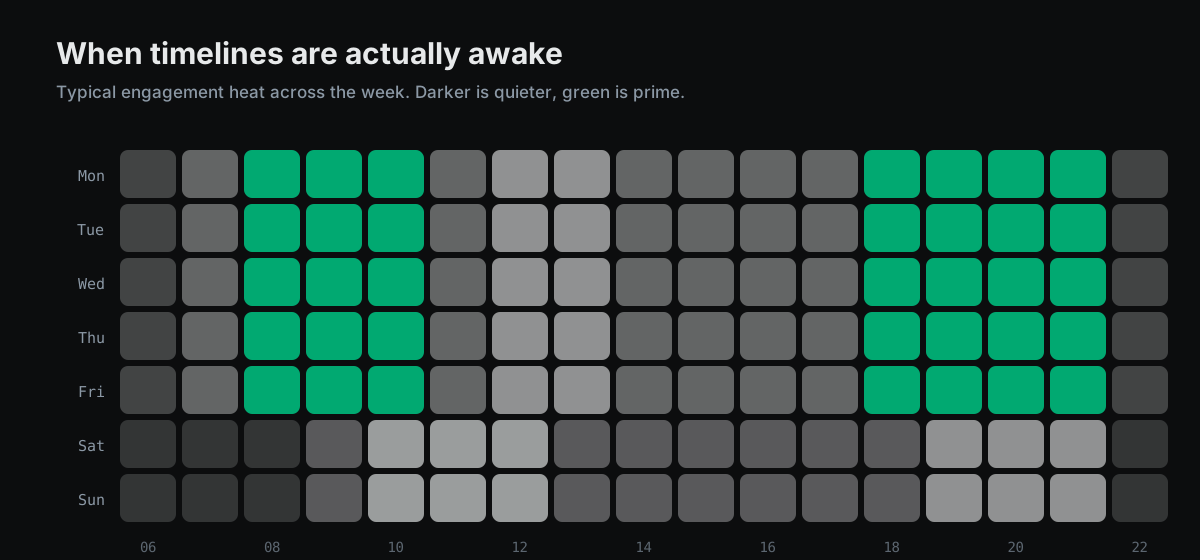
All hours above are in your audience's local time, and that is exactly where the generic advice falls apart.
Why global "best hour" charts mislead you
A chart built from millions of accounts describes an average person who does not exist. Your followers are not the average of X. They cluster somewhere: a timezone mix, a job, a habit. A few examples we see constantly:
- Developer audiences engage late at night, hours after the "experts" say the day is over.
- Finance and trading audiences are wide awake before the market opens, at hours the charts call dead.
- A US founder with half their followers in Europe has two mornings, and the European one often wins.
If you post at the globally recommended hour and your niche runs on a different clock, you are optimizing for someone else's followers.
Find your own window in 15 minutes
You do not need a study. You need your own last month of posts and a simple grouping:
- Take your last 30 posts. Ignore replies for this, just the posts.
- Note the hour each went out and the impressions it earned. Both are in your X analytics.
- Group by hour and compare against your median. Not the average: one lucky viral post will bend an average. You are looking for hours that beat your median more than once.
- Pick your top two windows and post into them for two weeks. One post per window. Keep the format of the posts roughly stable so you are testing the hour, not the content.
- Show up for the first 30 minutes after posting. Answering early replies is part of the timing game, because those replies are the signal the feed is waiting for.
Two weeks of that beats any infographic, because it is measured on your followers, in your niche, in your voice. This is also exactly the boring arithmetic MomentX runs for you: it reads your posts, finds the hours that outperform your median, and schedules tomorrow's drafts into them.
Match the post to the window
Once you know when your audience shows up, the next edge is matching what you post to the mood of the hour. The same idea performs differently at 9 in the morning and 9 at night, because people are in different modes:
- Mornings want signal. People are scanning with intent before work. Lessons, numbers, one clear insight per post. This is the slot for your strongest material.
- Lunch wants participation. Short window, low commitment. Questions, polls and one liners do well because they can be answered in ten seconds from a queue.
- Evenings want conversation. The couch scroll is longer and more emotional. Takes that split the room, stories, and before and after posts earn their replies here.
- Weekends want experiments. Volume is lower but so is the noise, and the feed is more forgiving. Test new formats on Saturday, keep what works for Tuesday morning.
None of this is a law. It is a starting grid, and your own numbers will correct it fast.
Three timing myths that refuse to die
"Post at 3 am to catch the US wave." If your followers are not actually awake then, you are just posting into the quietest room of your day. The US wave only exists if your follower graph has a US cluster, and your analytics will show it if it does.
"Never post on weekends." Weekends have less traffic and much less competition. For small accounts that trade is often positive: a decent Saturday post can out-earn a good Tuesday post that got buried under everyone else's good Tuesday posts.
"Posting more always helps." Two posts stacked into the same hour cannibalize each other, because the feed samples them to the same awake audience. Spacing the same two posts into two separate windows almost always earns more total impressions than firing them back to back.
Consistency beats the perfect hour
One thing the data is brutally clear about: an account that posts every day at decent hours grows faster than an account that posts occasionally at perfect ones. The feed learns which accounts reliably start conversations and samples them more generously. Your posting window is worth finding, but it pays off through repetition, not through a single perfectly timed banger.
Stop guessing what works for your account
MomentX reads your last month of posts, finds your real posting windows, and drafts tomorrow's posts into them, written in your voice.
Try MomentX free for 5 days