The first line is the whole post

Write a post you are proud of. Six lines, a real number in the middle, a decent ending. Now open the app and look at your own feed for ten seconds. You are not reading posts. You are reading first lines, and skipping most of them before your eyes reach line two.
Everyone accepts this about other people's posts and forgets it about their own. We edit the middle, polish the ending, and then hand the whole thing to a reader who is only ever going to see the top of it.
The feed is a queue of first lines
Depending on the client and the length, a post in a busy feed shows one or two lines before it truncates. Everything after that costs the reader a tap, and a tap is a decision. So the real unit of competition on X is not the post. It is the fragment that survives above the fold.
This is also why the first hour matters so much for distribution. Reach is extended in steps, and the step that decides everything downstream is whether the first sample of people stopped. We covered that mechanism in why your reach dropped. The first line is where you win or lose that sample.
Line one does not have to explain. It has to buy line two
This is the reframe that changes how you write openers. A first line is not a summary, an introduction or a topic sentence. Its only job is to make stopping cheaper than scrolling, and it has about a second to do it.
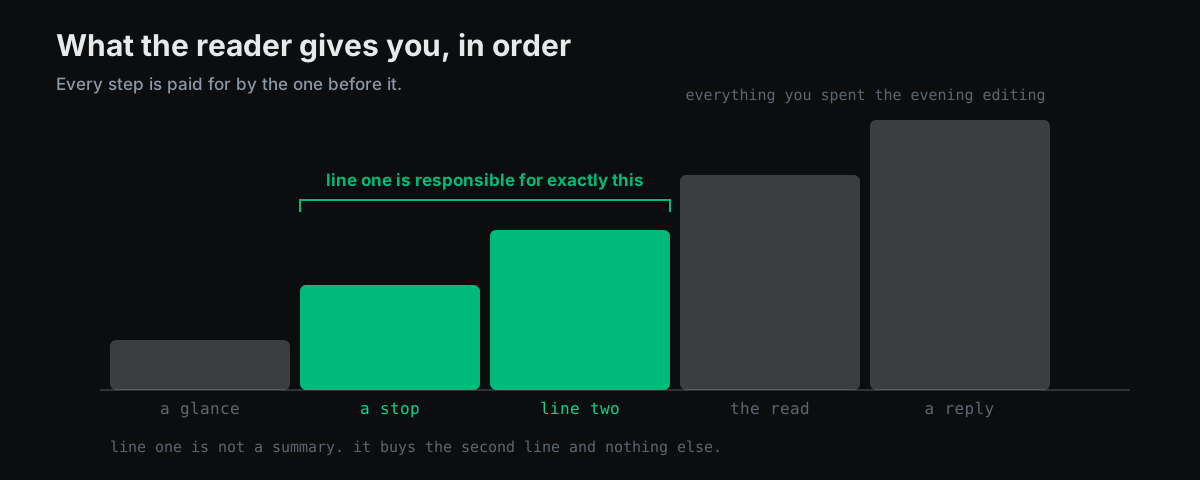
Notice what is not being asked of it. Line one does not have to be clever, or complete, or even grammatical. It has to create one small unresolved thing that costs less to resolve than to ignore.
Five openers that earn the second line
The specific number. "We lost 41 percent of trial users on day two." A number is proof that something real happened and that you were there for it. Vague scale does not work: "a lot of users" is not a number, it is an adjective wearing a costume.
The admission. "I shipped a migration that deleted three customers' data." Admissions are rare, which makes them expensive, which makes them worth stopping for. They also make you answerable, and answerable posts get replies.
The flat contradiction. "Posting more made my reach worse." A sentence that contradicts something the reader believes creates a question they now have to close. Do not hedge it into safety. The hedged version is the version they scroll past.
The named thing. "Stripe's retry logic charged one customer twice." Real names, real tools, real dates. Named things are concrete, and concrete things read as first hand rather than assembled from the internet.
The unfinished sentence. Start mid thought, with the setup already assumed. "So the fix was one line, and it took four days to find." The reader has to open it to learn what "it" was. This one is easy to overuse, so keep it for when the payoff is genuinely worth the tap.
Five openers that quietly kill the post
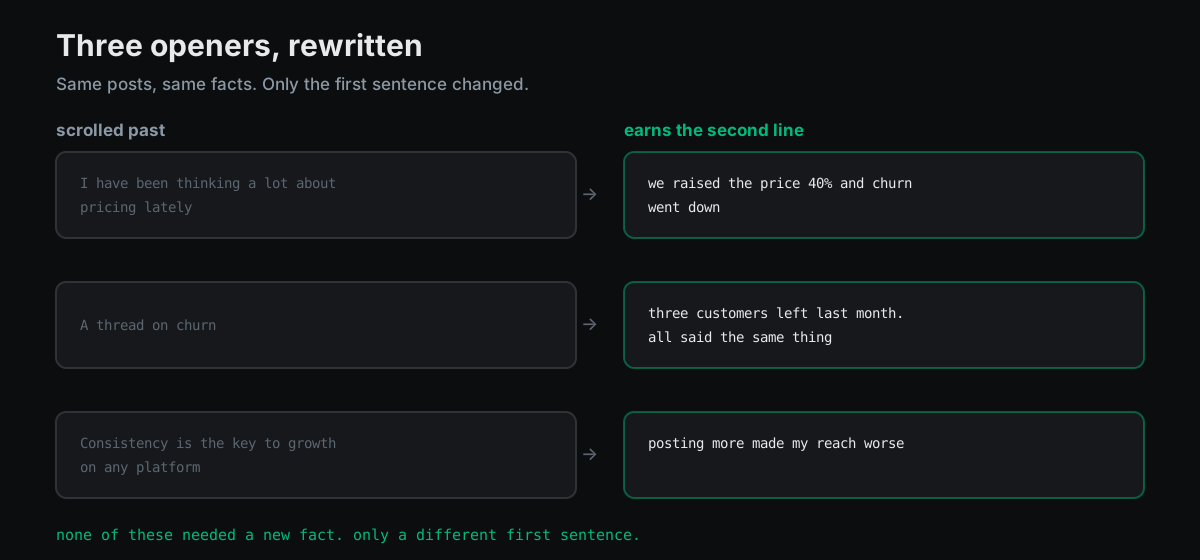
The throat clear. "I have been thinking a lot about pricing lately." You are describing having a thought instead of having it. The fix is almost always to delete this sentence entirely and start at the second one.
The label. "A thread on churn." "Some thoughts on hiring." Announcing the category is not the same as being interesting, and it spends your only line on filing rather than on content.
The question nobody owes you an answer to. "Ever feel like growth is impossible?" Rhetorical openers ask the reader to do work before they have been given anything. The answer is "no" and the thumb keeps moving.
The credential. "As someone who has built three companies." Authority is something a reader assigns after the fact, not something you can claim in advance. Lead with the thing you know and let the credential be obvious from it.
The abstraction. "Consistency is the key to growth on any platform." Could have been written by anyone, about anything, in any year. If the sentence survives being moved to a different industry, it is too general to stop anyone, which is the same failure described in the tells that make a post read as AI.
The thirty second fix
Before you send anything, try this: delete the first sentence and read what is left.
Most of the time the post is now better, because the sentence you wrote first was you clearing your throat, warming up, or telling the reader what you are about to tell them. The real opener was sitting in position two the whole time, waiting.
If deleting it breaks the post, put it back. You have lost ten seconds. If it does not break, you have just doubled the number of people who will read line two, and you did it by removing work rather than adding any.
How to tell which of yours worked
You do not need a feeling for this. Open your analytics and put your last twenty posts in two columns: the opener type you used, and the views. Then read it against your median, not your average, for the reason explained in the reach post.
- Group by opener, not by topic. You are looking for the shape that stops people, and the shape is independent of what the post was about.
- Compare the first hour, not the final number. The opener's whole job happens early. A post that opened well and finished average still tells you the opener worked.
- Keep the two that beat your median twice. Two hits is a pattern. One hit is a Tuesday.
Most accounts find they have two or three openers that reliably work for their audience and keep reaching for a fourth that never does.
Why our drafts open the way they do
When MomentX reads your last sixty days, one of the things it extracts is which openers earned reach on your account, not on a screenshot from someone else's. Some accounts land the flat contradiction and cannot make the admission work. Some are the opposite. That is a property of your audience, not a rule.
So the drafts you get open in the shapes that have already worked for you, rather than in a house formula. And you still edit before it goes out, which matters most here: the opener is the line you know best, because you know what you actually meant.
Where this fits
The first line decides whether anyone stops. After that, the rest of the machine takes over: what the algorithm does with the attention you earned, whether your audience was awake when you posted, how replies borrow someone else's distribution, and what a stranger finds when they tap your name. Every one of those starts with a line that made someone stop.
Find the openers that already work for you
MomentX reads your last month of posts, finds which first lines earned reach on your account, and drafts the next ones in those shapes.
Try MomentX free for 5 days