Consistency is not a streak

Everyone tells you to be consistent, nobody tells you why, and the reason people assume is wrong. The assumption is that the platform is keeping score: post every day and you earn credit, miss a day and you lose it.
There is no streak counter. Distribution is decided per post, on what that post does in its first hour, as described in what the algorithm rewards. Your Tuesday post does not get a bonus because you also posted on Monday.
Which raises the obvious question. If nothing is keeping score, why does consistency so clearly work?
Three reasons, none of them about the algorithm
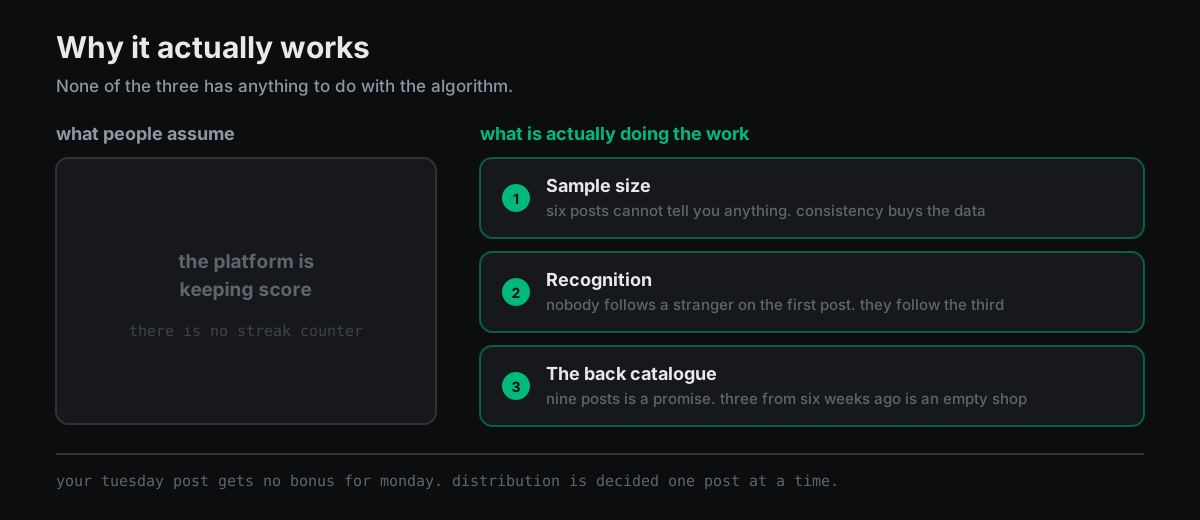
Sample size. You cannot learn anything from six posts. Which opener works, which hour is yours, which format your audience answers: every one of those questions needs enough posts for the pattern to separate from the noise. Consistency is how you buy the data that makes every other decision on this blog possible. At six posts you are guessing, and we made that argument at length in the cold start.
Recognition. Nobody follows a stranger on the first post. They follow the third time your name shows up saying something they found useful. Showing up repeatedly is what converts a name into a face, and that is a property of frequency, not of quality. A great post from someone unrecognised does less than a good post from someone the reader has now seen four times.
The back catalogue. A visitor judges you on the last nine posts sitting together, which is the whole argument in why your posts get views but no followers. Nine posts about one subject is a promise. Three posts from six weeks ago is an abandoned account, and a visitor can tell in one second.
What actually happens when you stop
People imagine a penalty. They imagine coming back after two weeks and being punished, held down, made to earn it again.
That is not what happens, and the truth is both less dramatic and more annoying. Your account is not marked. What you lose is human: the people who were starting to recognise you stopped seeing you, and recognition decays. You also lose the thread of your own data, so whatever you were learning about your audience has a gap in it now.
Coming back is not hard. It is just slower than it would have been if you had never left, because you are rebuilding recognition rather than continuing it. If your reach looks lower after a break, that is the usual suspect, and it is worth ruling out the more common one first in what actually causes a reach drop.
The failure mode is the burst, not the gap
The pattern that kills accounts is not missing a Tuesday. It is this: forty posts in nine days, then nothing for a month, then a post apologising for being away, then nothing.
Bursts feel productive and they are the most reliable way to quit. You spend the whole tank on week one, get results that are indistinguishable from noise because you have not run it long enough to know, feel disappointed, and stop. A volume spike is also on the pattern list in the reach post, which makes it worse than neutral.
The cadence that works is the one you would still be doing in October. For most people that is three or four posts a week, not seven, and the correct answer is whatever number you can hold on the week your job gets busy.
What to do on the days you cannot post
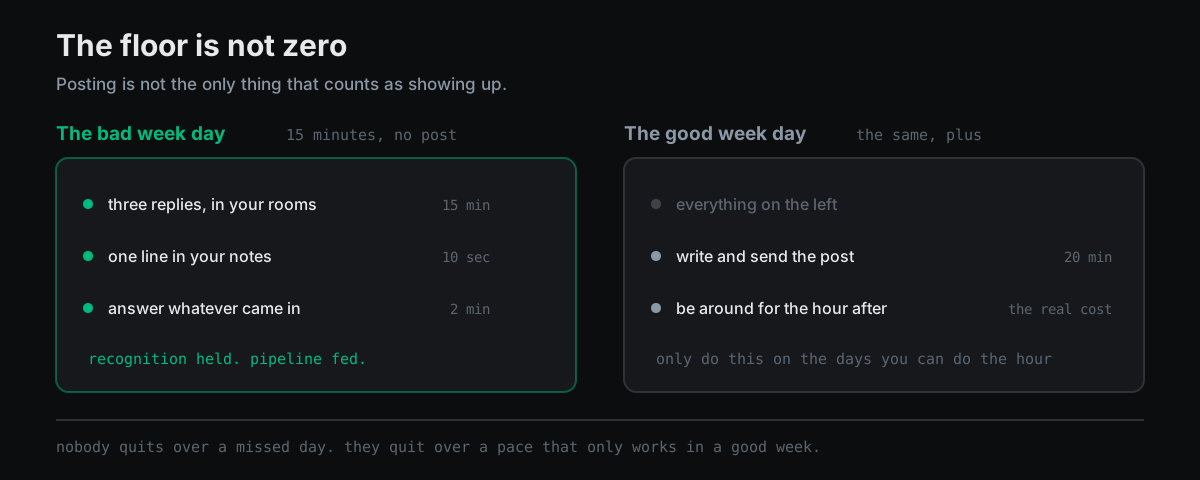
Here is the part that makes consistency survivable: posting is not the only thing that counts as showing up.
- Three replies. Fifteen minutes in the rooms you chose. This keeps you visible to the people who matter most and it is the highest leverage thing a small account can do anyway, per the reply strategy.
- One line in your notes. The thing that happened today, captured in ten seconds, so tomorrow's post is already half written. That is the whole system in what to post when you have nothing to say.
- Answer whatever came in. Your existing posts still have reply sections, and answering there costs a minute and does the work described in the second half of the post.
That is a legitimate day. It maintains recognition, it feeds the pipeline, and it does not require you to write anything good while tired, which is when most bad posts get published.
How to pick your number
Do not pick the number you want. Pick the number that survives contact with a bad week, and treat it as a floor rather than a target.
Two questions settle it. How many posts can you write without the quality falling off a cliff, and can you be around for the hour after each one? The second question is the one people forget, and it is usually the real constraint. Four posts you can stand behind beat seven you send and abandon.
Then hold it for eight weeks before you judge anything. Not because eight is magic, but because that is roughly when you have enough posts for a median to mean something.
Where a tool fits
The reason people miss days is almost never that they do not want to post. It is that at eleven at night the box is empty and starting from nothing is expensive.
MomentX removes that specific cost. It reads your last sixty days and has drafts waiting in your own voice, so the decision is edit or skip rather than write from scratch or skip. It also keeps the Engage queue full for the fifteen minute days, which is the version of this that actually gets used on the bad weeks.
It cannot make you show up. It can make showing up cost five minutes instead of forty, and on the marginal day that is the whole difference.
Where this fits
Cadence is the container everything else runs in. Inside it: where the material comes from, how a post opens, what shape it takes, and what you do in the hour after. If none of that is running yet, start at the cold start.
Make the marginal day cost five minutes
MomentX has drafts waiting in your voice and a reply queue ready, so a bad week costs you fifteen minutes instead of the streak.
Try MomentX free for 5 days